

Category: Marketing

Why Loyalty Matters: Measuring the Cost of Losing a Customer

Why Loyalty Matters | Jeff Mankoff

Hearing loyalty marketing experts tout the value of customer loyalty can often feel like listening to a broken record. We get that customer loyalty is important. We get that high levels of loyalty directly drive company profits, and ultimately, long-term success. We understand that developing long-term relationships with a customer base, much like a constituency, is so very critical to success.

But behind all the heady rhetoric lies a rock solid core question that many business owners don’t really get: How much does it cost to lose a long-term client? After all, you can’t manage what you can’t measure.

Calculating the Ripple Effect

Losing a long-term client, or when a patron goes “inactive”, represents a significant loss – more significant than many proprietor’s may assume. Sure, lost customers and their financial contribution to a firm’s bottom line could, in theory, be made up for with new business and new customers.

But the cost of acquiring new customers, through marketing campaigns, promotions, and other new customer acquisition strategies, requires a significant outlay of money that will eat into what profit can be earned. Long-term patrons don’t require the kind of expensive upkeep required to acquire, retain, and ultimately convert newcomers into regulars.

Regulars are low maintenance, yet according to the “Pareto principle”, otherwise known as the 80/20 rule, they often contribute the most to a company’s total income. Furthermore, when a long-term client takes his or her business elsewhere, the dumped company forfeits more than just a single purchase, they also lose out on that client’s future purchases as well, leading to a ripple effect of loss over timeEffect.pdf.

In Thriving on Chaos, author Tom Peters suggests calculating the 10-year value of a firm’s clientele. By using this simple device to help quantify a customer’s future buying potential, business owners can begin to understand and appreciate the value of a customer (and why it would be beneficial to keep them coming back). So how does this work for a sub shop restaurant with a customer that dines once a week and spends $10 each visit?

[sws_grey_box box_size=”80%”]

Annual Customer Purchases * 10 Years = Rough Lifetime Value (LVT)
For example: $520 avg yearly spend * 10 years = $5,200 rough LVT

[/sws_grey_box]

The problem is, most small shop owners would view this customer as a one-off $10 transaction, when in actuality this particular customer is worth $5,200. Interestingly, industries with repeat business like restaurants rarely track lifetime value, which is probably due to the fact they don’t have the data to track frequency and spend and identify high value customers, which is due to the fact that they do not have a loyalty program. The key take away here is that customers have a lifetime value (LTV), composed of many transactions that when viewed in sum, represent a much more significant amount of money than a simple, one-time purchase.

The customer and his or her future buying potential represents a huge appreciating asset for businesses. For example, a sub shop may do 2,000 transactions a month. Per the Pareto Rule, 20% or 400 on average dine there once a week, for a total of 1,600 transactions that month. Some of them dine more and some less, but you get the idea.

For many market sectors, losses resulting from poor customer loyalty don’t simply stop at lost direct sales. A disloyal customer may dissuade their friends and family from making purchases, greatly compounding the accrued losses a firm may suffer. A prospect worth $5,200 dollars over a decade may cost a business many times that depending on what kind of word of mouth business they bring (or turn away).

A dissatisfied customer will tell 8 to 10 others about their experience. 1 in 5 tell another twenty. Most American automakers are still wrestling with the ill effects of a bad PR ripple that has persisted for decades. As you can see, lost customers can, in some circumstances, start a chain-reaction of negative PR that can quickly become unmanageable. However, as we pointed out earlier, “you can’t manage what you can’t measure”.

So What’s Killing Loyalty?

A Rockefeller Foundation study found that the most common reasons formerly loyal customers chose to take their business elsewhere were as follows:

  • 14 percent switched to the competition because complaints were not handled.
  • 9 percent left simply because the competition offered a better deal.
  • 9 percent ceased doing business because of geographical relocation.

However, the vast majority of respondents, 68 percent, claimed to have switched for “no special reason at all.”

What that means, suggests author Jill Griffin, is that most customers leave because of benign neglect. More than half the time, customers will not communicate their dissatisfaction; they will simply take their business elsewhere, leaving many businesses both confused and flustered. As it turns out, maintaining a long-term relationship with individual consumers requires constant attention and investment.

Invest in Good Customers

With the Pareto principle mentioned earlier in mind, it is important to note that sometimes it is actually okay to lose a bad customer. Companies should be worried about acquiring fairweather customers that will bale as soon as a promotion ends, or from a bottom line perspective, customers who become more expensive to retain than they are worth.

Most companies simply cannot afford to buy loyalty – at least not everyone’s loyalty. Nor should they. Rather, firms should focus on acquiring and investing in so-called “good customers”.

Good customers typically exhibit higher CLV’s, and higher levels of loyalty, yet require significantly less resources to retain. Unfortunately, many establishments make the mistake of dumping their entire marketing budgets into enticing new customers to make first-time purchases – a rather expensive strategy with questionable returns. Rather, by identifying and then cultivating long-term relationships, as opposed to short-term transactions, with high-CLV patrons, a business stands a much better chance of succeeding.

If you or your business is spending tons of money with little return in order to acquire new customers, you are probably going about it wrong. The goal isn’t to buy loyal customers, it’s to earn them, then keep them with constant investment and engagement.

One way to retain good customers is to reward them for their patronage. However, implementing an effective loyalty rewards system is challenging.

For businesses looking for a seamless way to reward their best customers vPromos can help!

[wpbrad id=1]
Act Like You Know Your Loyal Customers

Act Like You Know Your Customers | by Jeff Mankoff

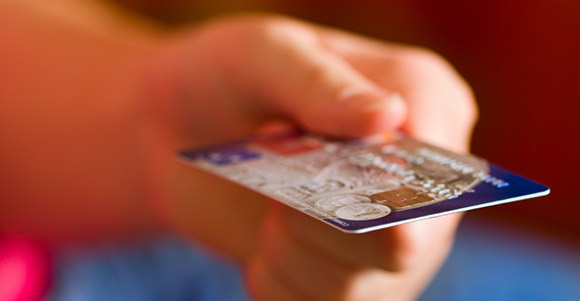
One of my favorite books is How To Win Friends and Influence People. Lesson number one is know the name of the person you are talking with, and use it. People love to hear their names. When I shop at Nordstroms, the sales person recognizes my face and he acts like he knows me, which he does. That makes me feel good. When I hand him my credit card he calls me by my first name. That makes me feel good. Sometimes they ask me if they can send the receipt to my email. And then they ask me for my email address. That does not make me feel good. I want the stores I shop at to recognize me, and treat me like they know me. That includes my knowing my email. It should be easy and automatic.

What I don’t like is going to a retailer, you know which ones, and when I am checking out they ask me to join the rewards program, every time, even though I am already a member. I won’t carry another card, so the store links my reward info with my phone number. Then the annoyance really starts. The cashier asks for my phone number (I have three) that is linked to the reward program. I never know which one to give him, or if it is under my wife’s phone number. And when we finally hit on a match, nothing happens. There is nothing reflecting points earned printed on the receipt. There is no email or text thank you. No real acknowledgment that the store knows me or appreciates my “loyal” business. And I never know where I am on my reward path, or how to even redeem my reward.

When creating a loyalty program, we want to make the member feel special. That means not forcing our valued customer to work hard to enroll, earn points, and redeem rewards. It must be easy, and give the impression that the store knows who you are, and is appreciative that you are shopping there. This means act like you know your customer and don’t ask him to join the program if he is already a member. And if he is a member, then send a “thank you” email or text, without your customer having to provide his mobile or email address every time. It should be easy and automatic, as if the store actually knows who you are and values you as a customer, so as not to annoy you with questions it should not have to ask.

Technology exists today to act like you know your loyal customers. I know because we are doing it today at vPromos.

[sws_grey_box box_size=”80%”] Today vPromos technology. . .

  1. Links customers credit cards with the merchant’s reward program at the POS;
  2. Recognizes reward members simply when they pay with an enrolled credit or debit card;
  3. Thanks the customer with an email or text triggered by the purchase transaction and informs the member how many points he just earned, and
  4. Lets the Loyal Member redeem rewards simply by paying with the same credit card he always use.

In effect, the key is to make the customer’s existing credit card his reward card. [/sws_grey_box]

Now that makes me feel good.

[wpbrad id=1]

Separating Friends From Fakes

Separating Friends from Fakes

Building friendships and relationships, whether between individuals or between a customer base and a brand, requires trust. Building a relationship through effective loyalty marketing is key in identifying and really getting to know your best customers

There Are Facebook Friends, and Then There Are Real Friends

Expansive social media platforms, such as Facebook, can often feel completely shallow and utterly meaningless. Social media metrics such as your friend count, wall-to-wall interactions, and event invitations do very little to actually tell you anything about other users, or even yourself, beyond a rudimentary kind of public scorekeeping.

[sws_blockquote_endquote align=”left” cite=”Michael LeBoeuf” quotestyle=”style01″]It’s not enough to reward your customers with good service. You have to make them aware of the good deal that they’re getting for doing business with you — and keep reminding them of that in many subtle, different ways. [/sws_blockquote_endquote] After all, what really is the difference between having 10 friends, 100 friends, or even thousands online that you never talk to? The number of social interactions happening through social media certainly doesn’t indicate the quality of a relationship or gauge the depth of social engagement.

Don’t get me wrong, the invention of social media platforms has revolutionized the ways we communicate, interact, connect, and eventually spread ideas and culture across time and space. Yet, the act of getting to know someone on a personal level, of becoming friends so to speak, hasn’t changed for millennia. To really get to know people, it takes quite a bit more effort, time investment, as well as the occasional dose of risk – things social media platforms in their current incarnations have allowed and encouraged users to opt out of entirely.

Making friends and close connections requires authentic care and attention, and more importantly, trust. Cultivating customers who are not only repeat visitors, but also fervent advocates of you and your business, requires the same kind of love and care. In the customer loyalty marketing space punch cards just don’t cut it anymore. vPromos CEO, Jeff Mankoff, posits that the biggest problem with consumer loyalty programs today… [may simply be the fact] that consumers don’t want to carry around another punch card. Generic loyalty tactics don’t build brands. In fact, punch cards, and other bland rewards programs, are so ubiquitous that customers actually feel burdened, even punished, by the sheer number. The whole point of implementing a rewards program is to differentiate your brand, and reward your customers – foisting another generic punch card ploy onto patrons may not be the best way to do so.

Starbucks: A Case Study of the Gold Card

The Starbucks corporation, which first opened its doors in 1971 as a small cafe in Seattle, is now a 13 billion dollar operation that is regularly ranked one of the most admired companies in the United States. Its success in commoditizing traditional cafe culture for the mass market made it a global brand, and has been widely copied and adapted by food service competitors. Starbucks may have popularized standardized cafe culture in the United States, but intense brand loyalty is what keeps the company well ahead of the pack.

One way Starbucks builds brand loyalty is through rewards initiatives which, on the face, operate with similar mechanics as other popular reward programs. The more you buy, the more you are rewarded. However, beyond this simplistic mechanism for increasing sales lies a deeper intent to build customer relationships.

For example, the “Gold Level”, the highest level of the company’s multi-tiered reward scheme (My Starbucks Rewards program), has an added layer of social prestige and targeted personalization built in. Attainment of gold status comes with a slick and shiny gold card with the individual’s name and the date of their ascendance imprinted on the card. And it works. It works because as a rewards program, it does more than reward loyal customers with more physical goods or financial savings, it rewards with social currency and prestige.

It is added value that isn’t tied to finances. For example, while a friend will lend you money from time to time, and you may do the same for them, your friendship isn’t based on money. Rather, you give and take advice, feedback, favors, social cues, relevancy, and occasionally, criticism. In the same way, Starbucks isn’t giving you an occasional free coffee because you’ve earned it; they are giving you a free coffee, as well as personalized service and other fixings, because they consider you a preferred customer, a friend of the company.

Michael LeBoeuf, author of How to Win Customers & Keep Them for Life, argues that, “It’s not enough to reward your customers with good service. You have to make them aware of the good deal that they’re getting for doing business with you — and keep reminding them of that in many subtle, different ways.”

What do friends do? They celebrate your birthday. What does Starbucks do? The coffee chain will give My Rewards members a free drink on their birthday, reminding you of how awesome Starbucks is. In fact, the manner in which Starbucks implemented their rewards program earned it the 5th spot on The Street’s list of best rewards programs.

Of course, even Starbucks makes mistakes from time to time. Every business has to deal with customers whose consumption habits have become less than loyal. Unfortunately, Starbucks has chosen to do so by handing out demotions, effectively punishing former star customers who do not made an adequate number of purchases in a given year. Most people don’t much like being punished, particularly for something as trivial as buying a certain number of cups of coffee in a given timeframe.

There are other, better ways to encourage formerly prolific customers to return to the fold without resorting to sticks. To start, preferred customers could be warned of an impending status change, then it could also be made easy for them to get back on the train once their status has been revoked. The key word here is “easy”.

By its very definition, rewards programs are often perceived by customers as a series of hoops that must be traversed to attain a certain privileged status or unique boon. Having already jumped through those requisite hoops, most people don’t want to do it again. In fact, many individuals will readily switch to an alternative if only to avoid redoing anything. Remember, 20 percent of a business’s customer base (your best customers) will often contribute 80 percent or more of its income. Don’t punish that 20 percent.

Building Loyalty By Building Trust

There are many strategies for establishing relationships with new customers and building trust with existing ones, including outstanding customer service, superior products and experiences, and value through customer loyalty initiatives. The former two are no-brainers that all good businesses single-mindedly pursue to the highest degree. But the third, customer loyalty and retention, is what separates a good business from truly successful industry leaders like Apple, Toyota, or Starbucks.

In a sense, customer loyalty programs are a trust-building exercise. Unlike the use of coupons and other forms of immediate price promotion, reward programs are all about delayed gratification and working towards a shared goal. The consumer trusts that his patronage now will be rewarded later, almost as a form of investment. In return, the company keeps their end of the bargain by giving added value, in both hard and social currency, once the agreed upon goal is met. In other words, building trust in the context of a brand relationship, much like in a peer to peer relationship, is a process that occurs over time.

While many business owners and other niche firms don’t compare to these mighty corporations in terms of scale, reach, or cultural leverage, there are very few lessons learned that cannot be applied to businesses of all shapes and sizes.

How do you feel about the effectiveness of punch cards? What are some creative ways your business cultivates a sense of loyalty and emotional attachment to your place of business or product?

[wpbrad id=1]