Category: Blog

Loyalty Programs Should be Seamless

Jeff Mankoff | Seamless Experience

Many of us use our spare time to surf the web, as opposed to virtually any other human activity because: A.) We can. And B.) It’s literally one click away.

Good loyalty rewards programs should feel and act the same way.

Smooth Out the Seams

For all intents and purposes, the threads that bind us to the brands that have traditionally dominated the marketplace have come undone. Old school brand loyalty is dead, or so they say. But loyalty itself isn’t. After all, internet companies like Google and Amazon enjoy nearly unchallenged market domination in their respective fields – information search, and online shopping.

Why? Because the services they offer are so incredibly easy, so straightforward, and for time-pressed consumers, so much more preferable than making the effort to patronize a brick-and-mortar establishment. The logic of the internet lends itself to creating a seamless experience devoid of any and all barriers between a consumer and their point of destination (or purchase).

Today, transactions work at the speed of light. Your rewards system should too.

Unfortunately the logic most businesses seem to pursue, when it comes to implementing a loyalty program, is the exact opposite. Keychains, cards, and other forms of wallet filler are a physical burden foisted on most consumers without their permission. Small wonder why both parties hate them. They have become, in effect, barriers.

At some point, most consumers will weigh the effort required to obtain a freebie, and the value of the freebie itself, and probably conclude that you don’t really want to reward them in the first place. At that point, a poorly conceived and implemented loyalty program is likely doing more harm than good, and should be discontinued altogether.

Consumers want ease, not more barriers to hurdle. As it turns out, the best rewards a company can give to its loyal patrons are a seamless experience and respect for customer time. Successful companies such as Amazon nail both those things.

Empower the Engagement

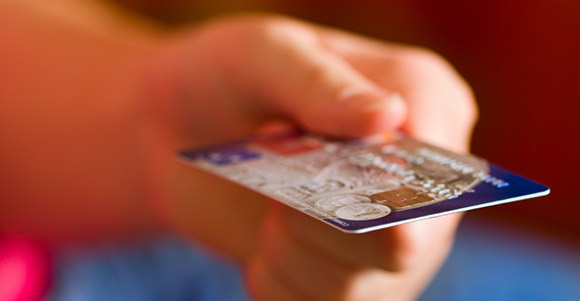
The whole point of instituting a loyalty program is to encourage engagement, and hopefully cultivate sales in the process. One of the best ways to do that is to ensure that the rewards ecosystem itself is completely integrated into daily life – seamlessly. Systems such as vPromo’s electronic loyalty program allows reward members to use their existing credit card, to make both the loyalty transaction and the act of rewarding much, much easier.

With the swipe of a credit card, users can earn points or punches and redeem rewards for the merchant’s reward program. No more cards to lug around. No more coupons that need to be cut or printed out. Therefore, the best loyalty rewards programs are themselves engaging to use, fast, and simple; i.e. seamless.

This kind of straightforward simplicity is the stuff loyalty is made of.

Why Loyalty Matters: Measuring the Cost of Losing a Customer

Why Loyalty Matters | Jeff Mankoff

Hearing loyalty marketing experts tout the value of customer loyalty can often feel like listening to a broken record. We get that customer loyalty is important. We get that high levels of loyalty directly drive company profits, and ultimately, long-term success. We understand that developing long-term relationships with a customer base, much like a constituency, is so very critical to success.

But behind all the heady rhetoric lies a rock solid core question that many business owners don’t really get: How much does it cost to lose a long-term client? After all, you can’t manage what you can’t measure.

Calculating the Ripple Effect

Losing a long-term client, or when a patron goes “inactive”, represents a significant loss – more significant than many proprietor’s may assume. Sure, lost customers and their financial contribution to a firm’s bottom line could, in theory, be made up for with new business and new customers.

But the cost of acquiring new customers, through marketing campaigns, promotions, and other new customer acquisition strategies, requires a significant outlay of money that will eat into what profit can be earned. Long-term patrons don’t require the kind of expensive upkeep required to acquire, retain, and ultimately convert newcomers into regulars.

Regulars are low maintenance, yet according to the “Pareto principle”, otherwise known as the 80/20 rule, they often contribute the most to a company’s total income. Furthermore, when a long-term client takes his or her business elsewhere, the dumped company forfeits more than just a single purchase, they also lose out on that client’s future purchases as well, leading to a ripple effect of loss over timeEffect.pdf.

In Thriving on Chaos, author Tom Peters suggests calculating the 10-year value of a firm’s clientele. By using this simple device to help quantify a customer’s future buying potential, business owners can begin to understand and appreciate the value of a customer (and why it would be beneficial to keep them coming back). So how does this work for a sub shop restaurant with a customer that dines once a week and spends $10 each visit?

[sws_grey_box box_size=”80%”]

Annual Customer Purchases * 10 Years = Rough Lifetime Value (LVT)
For example: $520 avg yearly spend * 10 years = $5,200 rough LVT

[/sws_grey_box]

The problem is, most small shop owners would view this customer as a one-off $10 transaction, when in actuality this particular customer is worth $5,200. Interestingly, industries with repeat business like restaurants rarely track lifetime value, which is probably due to the fact they don’t have the data to track frequency and spend and identify high value customers, which is due to the fact that they do not have a loyalty program. The key take away here is that customers have a lifetime value (LTV), composed of many transactions that when viewed in sum, represent a much more significant amount of money than a simple, one-time purchase.

The customer and his or her future buying potential represents a huge appreciating asset for businesses. For example, a sub shop may do 2,000 transactions a month. Per the Pareto Rule, 20% or 400 on average dine there once a week, for a total of 1,600 transactions that month. Some of them dine more and some less, but you get the idea.

For many market sectors, losses resulting from poor customer loyalty don’t simply stop at lost direct sales. A disloyal customer may dissuade their friends and family from making purchases, greatly compounding the accrued losses a firm may suffer. A prospect worth $5,200 dollars over a decade may cost a business many times that depending on what kind of word of mouth business they bring (or turn away).

A dissatisfied customer will tell 8 to 10 others about their experience. 1 in 5 tell another twenty. Most American automakers are still wrestling with the ill effects of a bad PR ripple that has persisted for decades. As you can see, lost customers can, in some circumstances, start a chain-reaction of negative PR that can quickly become unmanageable. However, as we pointed out earlier, “you can’t manage what you can’t measure”.

So What’s Killing Loyalty?

A Rockefeller Foundation study found that the most common reasons formerly loyal customers chose to take their business elsewhere were as follows:

  • 14 percent switched to the competition because complaints were not handled.
  • 9 percent left simply because the competition offered a better deal.
  • 9 percent ceased doing business because of geographical relocation.

However, the vast majority of respondents, 68 percent, claimed to have switched for “no special reason at all.”

What that means, suggests author Jill Griffin, is that most customers leave because of benign neglect. More than half the time, customers will not communicate their dissatisfaction; they will simply take their business elsewhere, leaving many businesses both confused and flustered. As it turns out, maintaining a long-term relationship with individual consumers requires constant attention and investment.

Invest in Good Customers

With the Pareto principle mentioned earlier in mind, it is important to note that sometimes it is actually okay to lose a bad customer. Companies should be worried about acquiring fairweather customers that will bale as soon as a promotion ends, or from a bottom line perspective, customers who become more expensive to retain than they are worth.

Most companies simply cannot afford to buy loyalty – at least not everyone’s loyalty. Nor should they. Rather, firms should focus on acquiring and investing in so-called “good customers”.

Good customers typically exhibit higher CLV’s, and higher levels of loyalty, yet require significantly less resources to retain. Unfortunately, many establishments make the mistake of dumping their entire marketing budgets into enticing new customers to make first-time purchases – a rather expensive strategy with questionable returns. Rather, by identifying and then cultivating long-term relationships, as opposed to short-term transactions, with high-CLV patrons, a business stands a much better chance of succeeding.

If you or your business is spending tons of money with little return in order to acquire new customers, you are probably going about it wrong. The goal isn’t to buy loyal customers, it’s to earn them, then keep them with constant investment and engagement.

One way to retain good customers is to reward them for their patronage. However, implementing an effective loyalty rewards system is challenging.

For businesses looking for a seamless way to reward their best customers vPromos can help!

[wpbrad id=1]

Act Like You Know Your Loyal Customers

Act Like You Know Your Customers | by Jeff Mankoff

One of my favorite books is How To Win Friends and Influence People. Lesson number one is know the name of the person you are talking with, and use it. People love to hear their names. When I shop at Nordstroms, the sales person recognizes my face and he acts like he knows me, which he does. That makes me feel good. When I hand him my credit card he calls me by my first name. That makes me feel good. Sometimes they ask me if they can send the receipt to my email. And then they ask me for my email address. That does not make me feel good. I want the stores I shop at to recognize me, and treat me like they know me. That includes my knowing my email. It should be easy and automatic.

What I don’t like is going to a retailer, you know which ones, and when I am checking out they ask me to join the rewards program, every time, even though I am already a member. I won’t carry another card, so the store links my reward info with my phone number. Then the annoyance really starts. The cashier asks for my phone number (I have three) that is linked to the reward program. I never know which one to give him, or if it is under my wife’s phone number. And when we finally hit on a match, nothing happens. There is nothing reflecting points earned printed on the receipt. There is no email or text thank you. No real acknowledgment that the store knows me or appreciates my “loyal” business. And I never know where I am on my reward path, or how to even redeem my reward.

When creating a loyalty program, we want to make the member feel special. That means not forcing our valued customer to work hard to enroll, earn points, and redeem rewards. It must be easy, and give the impression that the store knows who you are, and is appreciative that you are shopping there. This means act like you know your customer and don’t ask him to join the program if he is already a member. And if he is a member, then send a “thank you” email or text, without your customer having to provide his mobile or email address every time. It should be easy and automatic, as if the store actually knows who you are and values you as a customer, so as not to annoy you with questions it should not have to ask.

Technology exists today to act like you know your loyal customers. I know because we are doing it today at vPromos.

[sws_grey_box box_size=”80%”] Today vPromos technology. . .

  1. Links customers credit cards with the merchant’s reward program at the POS;
  2. Recognizes reward members simply when they pay with an enrolled credit or debit card;
  3. Thanks the customer with an email or text triggered by the purchase transaction and informs the member how many points he just earned, and
  4. Lets the Loyal Member redeem rewards simply by paying with the same credit card he always use.

In effect, the key is to make the customer’s existing credit card his reward card. [/sws_grey_box]

Now that makes me feel good.

[wpbrad id=1]

Don’t Tax Your Customers

Don't Tax The Customer | by Jeff Mankoff

Want to win repeat customers that will come back to your establishment time and time again? Rewards marketing can be a good strategy for providing both value-added benefits and as a means of differentiating from the competition. However, many businesses, in their rush to build a rewards program themselves often forget the cardinal rule of rewards marketing:

Make it easy.

Nothing kills a rewards program faster than inconvenience.

Don’t Impose a Brain Tax on Your Customers

In the United States, no one, other than tax preparers and accountants likes the process of paying taxes. The forms are just too hard. In fact, according to a compilation of Gallop polling on this matter, it would be safe to say that a majority of Americans hate the process of paying taxes – regardless of how high, or relatively low they may be. It is the process. Paying taxes should be easy. It is easy in Europe where they have a value added tax, a National sales tax if you will. That is an easy tax, and not many people think about it when they pay, or for that matter complain about it. If I were in charge, I would set up an easy, value added tax, to take the pain out of taxes.

When it comes to businesses, and their interaction with customers, many establishments unknowingly levy another kind of tax – a “brain tax” – measured in time wasted and inconvenience, on their clientele. Worse, many establishments do so without even bothering to notify the populace.

In today’s marketplace, businesses are vying for a share of the public’s attention, and obviously, a piece of their wallet too. Customer loyalty programs are now a must for businesses looking to win new customers, reward loyal ones, and convert fickle buyers into repeat customers. The average consumer is enrolled in an astonishing 18 separate programs, many of which are structured in exactly the same manner, making differentiation a key frustration.

However, what enrollment numbers can’t quantify is the actual level of engagement in the ocean of loyalty programs out there. A study released by Monash University found that the average male actively participated in a grand total of two programs. Females, who are often more heavily targeted for participation, averaged four. That means that out of the many hundreds of rewards programs consumers are exposed to, they only take action on 18, with 14 to 16 of that elite selection languishing in cognitive oblivion. The numbers don’t look good.

The question for many businesses out there remains: How do we improve on these dismal statistics?

Playing the Rewards Game to Win

The key to a rewards program that works is quite simple: simplicity. More specifically, ease of use appears to be the key differentiator. American Banker Magazine reports that the primary driver of customer preference for certain rewards programs was, in fact, determined by how easy those programs were to use.

However, a stunning 81 percent of loyalty members polled don’t even know the program benefits of the programs in which they are enrolled or how and when they will receive rewards. As a result, as much as one third of all rewards dollars and miles, amounting to some 16 billion dollars annually, goes unredeemed, thanks to hurdles and opacity built into many rewards schemes.

This leads to a potentially damaging conclusion in the mind of consumers, “They don’t actually want to reward me.” Or worse, “This is just another marketing scheme.”

Consumer trust in businesses has been on the rocks for decades, and correlates with a decline in general loyalty in the marketplace. As it turns out, consumers don’t like taxes much either, particularly if what they are expending is time and effort. Hurdles, such as long application processes or convoluted rewards hierarchies, effectively function as a brain tax.

Regardless, the fact remains: Businesses looking to implement a successful loyalty program need to make their approach easy to understand, and even easier to use.

4 Ways to Keep Your Rewards Program Nice and Easy

Keep the Customer Informed

85 percent of loyalty members haven’t heard a single word from the establishment or service provider since the day they signed up. That’s an enormous, wasted opportunity. Consumers take action to sign up for a program exactly because they either like the service or product, or see the potential for savings and other forms of value added in the rewards plan. This is a target audience that has taken the first step towards full engagement and given the right attention and incentives, could be ready to take their relationship with the company, or brand, even further.

Don’t Introduce New Rules Willynilly

study done by researchers at the University of Michigan showed that learning new rules is both mentally taxing and potentially costly. The truth is, people today only have so much time and brainpower to devote to any one subject. That means that if the rules of a loyalty program change enough, many consumers will simply cease participating in it.

Help Your Customers On Their Way

When it comes to rewards points, punch cards, and other “buy X number of times, get one free” schemes, nothing is more discouraging for a customer than feeling like the reward itself is impossible, or difficult to obtain. On the flip side, few things can encourage a repeat visit as strongly as a rewards threshold that is on the verge of being met.

Therefore, rather than providing one goal that may require many visits, it is far better to intersperse many smaller benefits along the way to a larger reward. Has the customer been coming less often recently? Give them some points to help them along. Is it their birthday? Go ahead and give them a freebie this time. The point is, don’t make reaching their rewards goal a hassle. Make it easy. By culturing a reward relationship, as opposed to focusing on a singular goal, it encourages constant user engagement.

Provide Some Actual Value

Of course any rewards goal is no good if it isn’t worth the effort. Only 36 percent of consumers received a reward or promotion that actually motivated them to make a second visit. Only 17 percent of U.S. respondents say that loyalty programs are “very influential” in their purchasing decisions. If it’s not worth their time, consumers won’t bother.

A customer’s time is important – and irreplaceable. Make it worth their while, and more importantly, make it quick. Customer attrition numbers cast a rather bleak picture on the efficacy of many loyalty programs.

Considering the inbuilt hurdles, worthless or hard to get rewards, and other forms of cognitive taxes imposed on consumers by many ill-conceived loyalty schemes, it’s small wonder the public is often wary of these programs. As it turns out, proposing a tax on their time and energy is not a winning proposition. Yet many companies still do it, and wonder why their often times expensive loyalty schemes aren’t paying any dividends.

The inconvenient truth is, it’s because they’re program just isn’t convenient enough. In an age of increasing consumer choice, and lessening attention spans as a result, if your loyalty pitch can’t be understood and put to use immediately, no one will care.

How have loyalty programs worked out for you? To learn more about easy loyalty marketing, please visit vPromos at http://www.vpromos.com