

Category: Blog

Card-Linked Offers Mean No Hassles

Card-Linked Offers and Small Business | Jeff Mankoff

How and why card-linked offers are poised to boost the earning potential of businesses across the nation.

The Daily Deals (Re)Model

It’s no secret. Consumers and merchants alike have lost their enthusiasm for Daily Deals a la Groupon, Living Social, and a million other copy-cat e-coupon peddlers. To the discerning eyes of the general public, once the novelty of getting “half-off French cuisine” wore off, many of these email-based platforms began looking suspiciously similar to spam. On the merchant side, the initial promise of daily deals either never materialized, or manifested itself in a new set of insurmountable challenges – such as an incredibly lopsided merchant agreement which gobbled up most of a local merchant’s profits while saddling them with all the risks.

Even worse, many establishments who did manage to run a successful deal campaign through the e-coupon platform soon found that the deal-seeking crowds immediately disappeared after the deals ran their course. As it turns out, cut-rate price promotions don’t engender loyalty at all. This effectively left partnering merchants back at square one, or for an unlucky few, utterly ruined financially.

The daily deals financial model is, in its current configuration, probably not business-friendly. More accurately, it is just a remodel, a re-skinning of the age-old practice of showering consumers with coupons – hardly the lauded cure for the marketing woes of a business.

The Card-linked Offers Model

In lieu of these revelations, what is a business to do? In truth, there is no silver bullet fix for low customer engagement, faltering consumer loyalty, or lack of general enthusiasm. Ultimately, the ideal solution is to build a better product, improve customer service, and design a superior customer experience. Groupon and its many imitators failed to add value on all three critical fronts, relying exclusively instead on aggressive price slashing.

Card-linked offers, in contrast, take the idea of ecommerce integration a step in the right direction. The real strength of card-linked systems, and Groupon’s greatest failure, lay in its potential as an engagement tool.

In Groupon’s case, when it came down to it, it was still all about hawking coupons. The only difference was that the act of salesmanship received a technology-appropriate upgrade in the form of a slick website and a well-developed email-farming apparatus. The cultivation of actual customer loyalty was left unaddressed.

Card-linked systems aim to dig much deeper and develop what some call a sustainable business ecosystem, within which consumers, local merchants, and financial institutions all mutually benefit.

The benefits for financial institutions and banks are obvious – more card usage. But, both consumers and merchants also benefit greatly within a card-linked ecosystem. Consumers skip the need to print and cut out coupon promotions and mail-in-rebates, and receive rewards as an easy-to-decipher percentage of their total spending.

No confusion about stacking deals. No worrying about expiration dates. No hassles.

Better yet, deals are individually targeted and directly linked to a credit or debit card, drastically reducing unwanted email inbox filler and frantic check-out counter searching for lost coupons. Merchants benefit from the expanded reach offered by credit card companies. More importantly, pairing promotions directly with specific credit cards effectively allows merchants to “borrow” consumer loyalty from the card providers.

Merchants also gain easy-to-parse, and highly valuable, consumer purchasing histories, which can help inform increasingly effective and individualized promotions consumers will actually act on. All this is to say that card-linked systems are poised to become an entirely new integrated engagement platform, rather than just the reformulation of an old strategy.

For businesses, this could be a transformative development that has the potential to tie all the disparate pieces of conventional marketing practice into simple, unified architecture. As card-linked offers gain wider acceptance, they will eventually become as commonplace as punch cards and membership cards are today. By leveraging a host of equalizing technologies, such as social media and card-linked offers, retailers and business outfits stand a real chance of competing on a wider scale than ever before.

For businesses looking for a way to implement real-time offers to their best customers vPromos can help.

The Power of Card-Linked Offers

Benefits of Card-Linked Systems | Jeff Mankoff

Can card-linked offers co-exist with daily deals?

It doesn’t seem like too long ago when the Daily Deals typhoon, led by the meteoric rise of Groupon, was sweeping the nation. Google offered ownership of $6 billion, but Mason and the other investors turned that down. On November 5, 2011, Groupon went public, with a market cap around $6 billion. Groupon’s market cap today is still around $6 billion. Not bad. But it sure has not taken off. Why not?

Groupon had no real business model. The problem with Groupon is that it is a one time deal, and is done. Groupon will deliver Groupon customers to a merchant, but not the customer’s email address.

After redeeming the Groupon, the Groupon customer is on to the next Groupon. No customer has been acquired. No customer loyalty has been created.

Daily deals in many cases are not good for merchants, with one caveat. If a daily deal actually enrolls a customer into that merchant’s loyalty program, then it is a good deal for the merchant. But with paper Groupon certificates, that never happened.

First, A Card-Linked Program

Card-Linked Offers can augment a card-linked loyalty program and actually enroll a customer into a card-linked loyalty program. But before this can happen, the merchant first needs a card-linked loyalty program.

A merchant who wants to start a loyalty program must appreciate the Pareto rule, the 80/20 rule. Eighty percent of the merchant’s business comes from existing customers. Therefore a merchant first needs to enroll its own customers. The best way to do that is at the point of sale. At vPromos we are seeing great success with loyalty enrollment of the customer’s credit card at the POS. It is easy.

Augmenting Enrollment with Card-Linked Offers

Once the merchant has a card-linked loyalty program up and running, having enrolled its own customers, augmenting enrollment with card-linked offers makes perfect sense.

Here is how it would work. When a consumer goes online to buy a special offer at Groupon for example, that customer’s ID, email, and credit card number token will be shared with the loyalty company for that merchant. When the consumer is ready to redeem the card-linked offer at that merchant, he simply pays the way he normally does, with the same credit card used to purchase the special offer. The POS prints out the special offer discount right at the POS, followed by an instant email thanking the consumer for redeeming the offer, and, most importantly, welcoming the consumer to the merchant’s loyalty program. Now, every time that customer pays with that credit card, he earns points or punches towards that merchant’s reward program.

Loyalty Program and Ongoing Engagement Will Do The Rest

This is huge for merchants. This means marketing dollars invested online can be used to not only get a customer in the door, but potentially acquire that customer for life. Once the merchant has the email address, it can engage the customer and get him back to the store. The loyalty program and ongoing engagement will do the rest.

But what will the Groupons of the world think of this model? The reason they don’t share the email today is that the merchant has to come back for more. If the customer is acquired by the merchant, the media company, Groupon in this case, may run out of customers to deliver the merchant.

The Future is Happening Now

The offers space is evolving, and it appears that card-linked offers are the way of the future. Except that the future is happening now.

My next blog will talk about Real time card-linked offers vs. Not real time. The difference is huge.

For businesses looking for a way to implement real-time offers to their best customers vPromos can help.

 

Card-Linked Offers: The Future of Deals

Card-Linked Offers | Jeff Mankoff

How Facebook, Microsoft, Bank of America, Discover, Mastercard, and other banking and technology heavyweights are getting together to change the way we do discounts.

On October 7th the scions of Silicon Valley and the big bulls on Wall Street got together at this year’s Money2020 Expo to announce The CardLinx Association, a new, cross-industry group aimed at promoting card-linked offers. What’s particularly interesting is the seemingly diverse litany of brand name companies involved in the venture – Facebook, Microsoft, Bank of America, and MasterCard just to name a few – and the coherence of their concerted effort to push what could, quite possibly, do away with coupon clippings and punch cards for good.

Good For Consumers, Great For Businesses

The way we do business is changing. The emergence of online promotions in particular, along with the rise of mobile computing and the proliferation of smartphones, have fundamentally shifted the way consumers interact with, engage with, and make purchases from most vendors. At the same time, traditional means of promoting business are failing.

The ocean of conventional promotional materials (i.e. paper coupons, mail-in rebates, etc.), most of which are tossed in the trash, have become an enormous burden on time-pressed consumers. In other words, the archaic nature of many “offers” programs is physically limiting growth in a rapidly digitizing society. CardLinx referred to these limiting factors as a form of “friction” preventing the easy acquisition and redemption of relevant offers. For the average consumer, time and convenience is the new currency.

Traditionally, the act of driving consumer action, promoting customer loyalty, and collecting personal information for behavioral clues are handled as three separate processes. From a business’s perspective, this often means that the establishment in question would have to implement independent advertising campaigns, loyalty programs, and data farming apparatuses – all expensive, all with their own support requirements, and all completely disconnected from one another.

Card-linked offers promise to do all three with a single simple, integrated system.

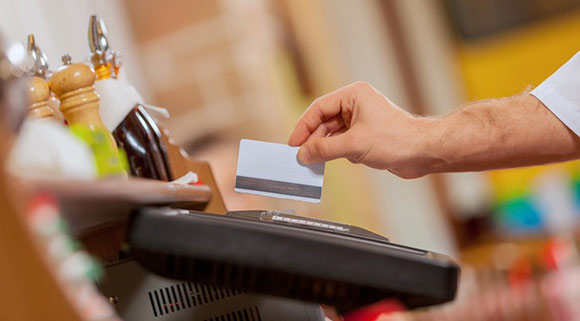
Users simply sign up, purchase a digital coupon, which is then linked directly to their debit or credit card, and make a qualified purchase at a participating business. The discount is directly applied to their statement in real-time at the point of sale. No printing coupons. No swiping loyalty credentials. No waiting for the rebate to take effect. No hassles for both sides. Better yet, by parsing personal purchase history, vendors can craft deals relevant to each individual and deliver them directly.

Consumers get the exact deals they want, when they want them. Businesses get a unified architecture for promoting customer loyalty and delivering promotions. That’s a win-win.

Best Next Thing

Location-based, real-time offers were not a part of the retail experience just a few years ago. Yet, as consumers continue to demand, and ultimately acquire, more and more flexibility and agency in the way they approach the buying process, the drive towards this type of marketing innovation will only continue. The truth is, card-linked offers could be the best next disruptive technology to fundamentally change the way we buy and sell.

Businesses with the ability to adapt these market-shaping technologies stand a very good chance of better serving their customers, differentiating themselves from the competition, and gaining a critical key market advantage. LivingSocial certainly seems to think so. The much lauded online purveyor of daily deals, which has taken a beating in recent times, is a key CardLinx founding member and is betting that card-linked offers are indeed the way of the future.

For businesses looking for a way to implement real-time offers to their best customers vPromos can help.
When Building a Loyalty Program: Time is of the Essence

When Building A Loyalty Program: Time is of Essence | by Jeff Mankoff

Sometimes it seems as if life just keeps on getting faster. And faster. And faster. In fact, where time was once measured in years, months, and days, today time is now measured in minutes, seconds, and even milliseconds.

To us, what happens between the confines of a measurable second is more or less instantaneous. Whether it be a simple Google search or service in a restaurant, we have come to expect instantaneous, or at least very, very fast results.

It is, after all, against this backdrop of the instantaneous that our expectations are informed. Our expectation of loyalty programs is no different.

Now or Never

If there’s one thing consumers hate more than anything, it’s having to wait. 50 percent of mobile users will abandon an ecommerce site that takes more than 3 seconds to load. 3 in 5 won’t return to it.

In the brick and mortar world, half of all consumers would not return to an establishment that kept them waiting. Amazon could purportedly lose as much as 1.6 billion dollars in a year if its webpages were delayed a second.

Yet for some reason, the vast majority of loyalty programs out there continue to insist that consumers carry around a keyfob, wallet-busting loyalty cards, or other unwanted loyalty paraphernalia. If the difference of a single second can make or break purchases online, chances are the inconvenience of having to lug around a whole host of loyalty accessories will render the offending reward programs mostly ineffectual.

What is the main issue with these conventional schemes? They inconvenience consumers and needlessly waste their time. Want to get a free sandwich? You’re going to have to dig through your wallet or purse for the punchcard. Want to get members-only pricing on select products? You’re going to have to fill out this long and tedious application form.

Cut. To. The. Chase.

When it comes down to it, if a consumer can’t have what they want when they want, most consumers would rather just not have it. Implementing an instantaneous, seamless rewards system is a critical first step towards cultivating long-term buyers in an era of short-term consumer allegiances.

I’d love for you to leave a comment below.
